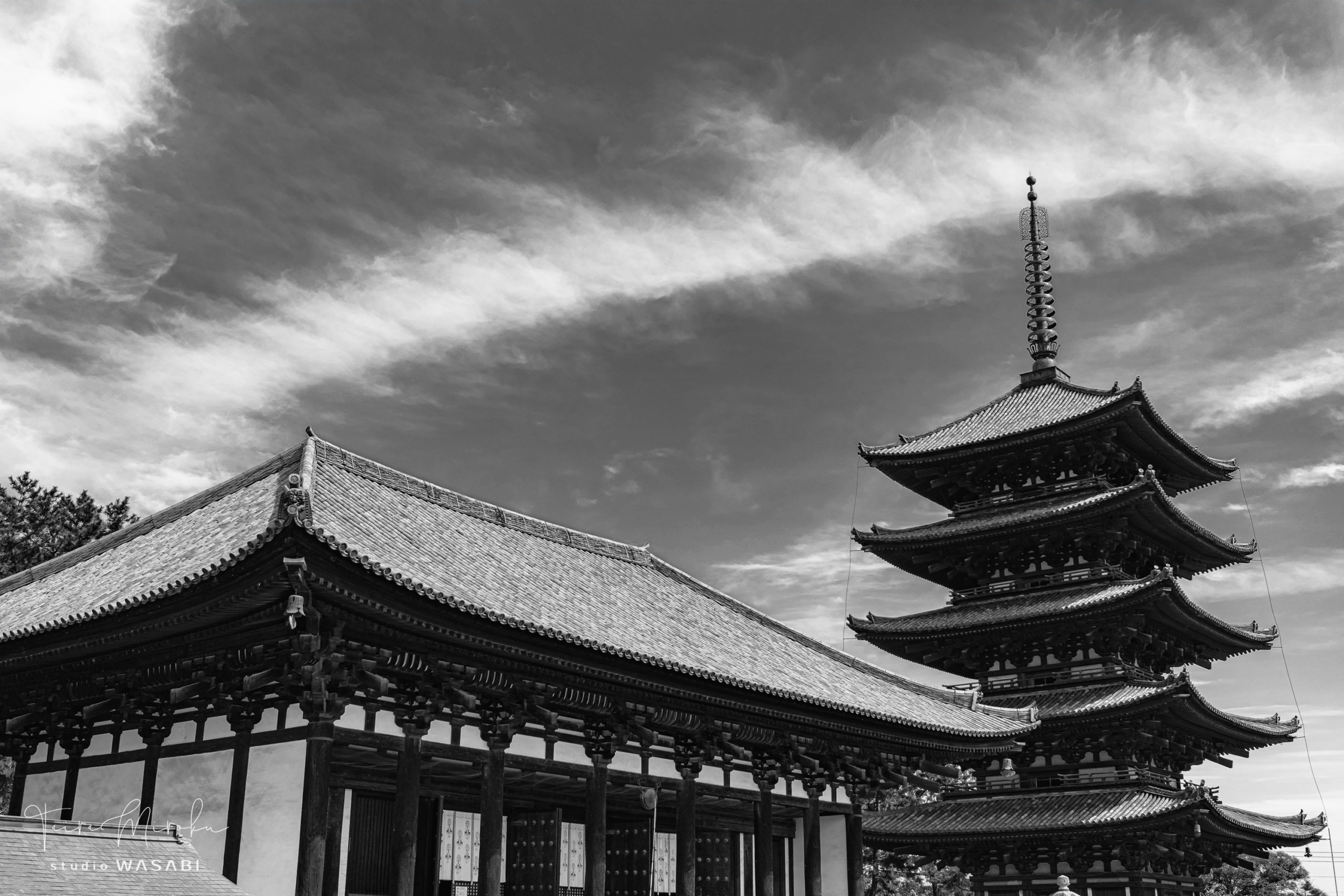
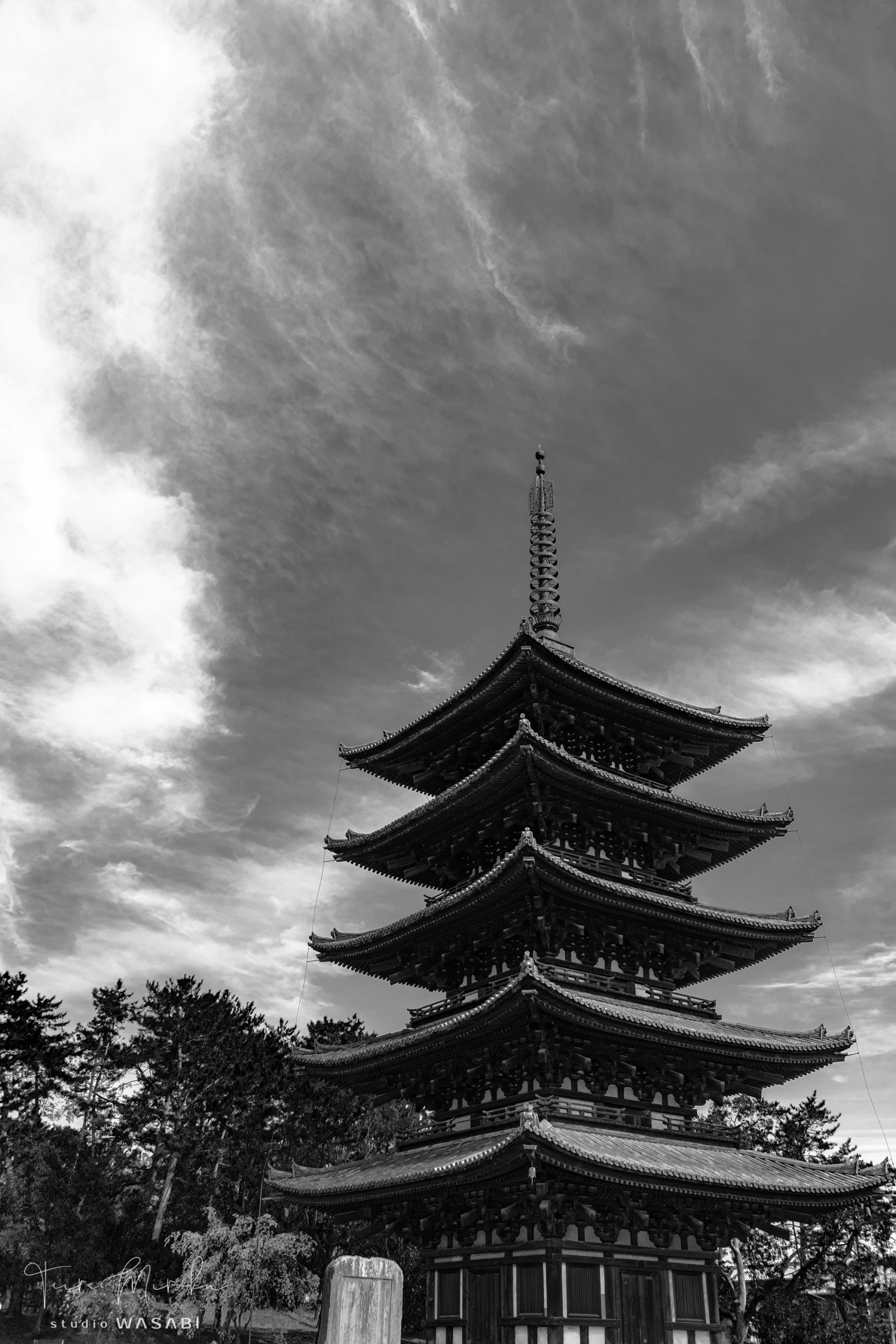
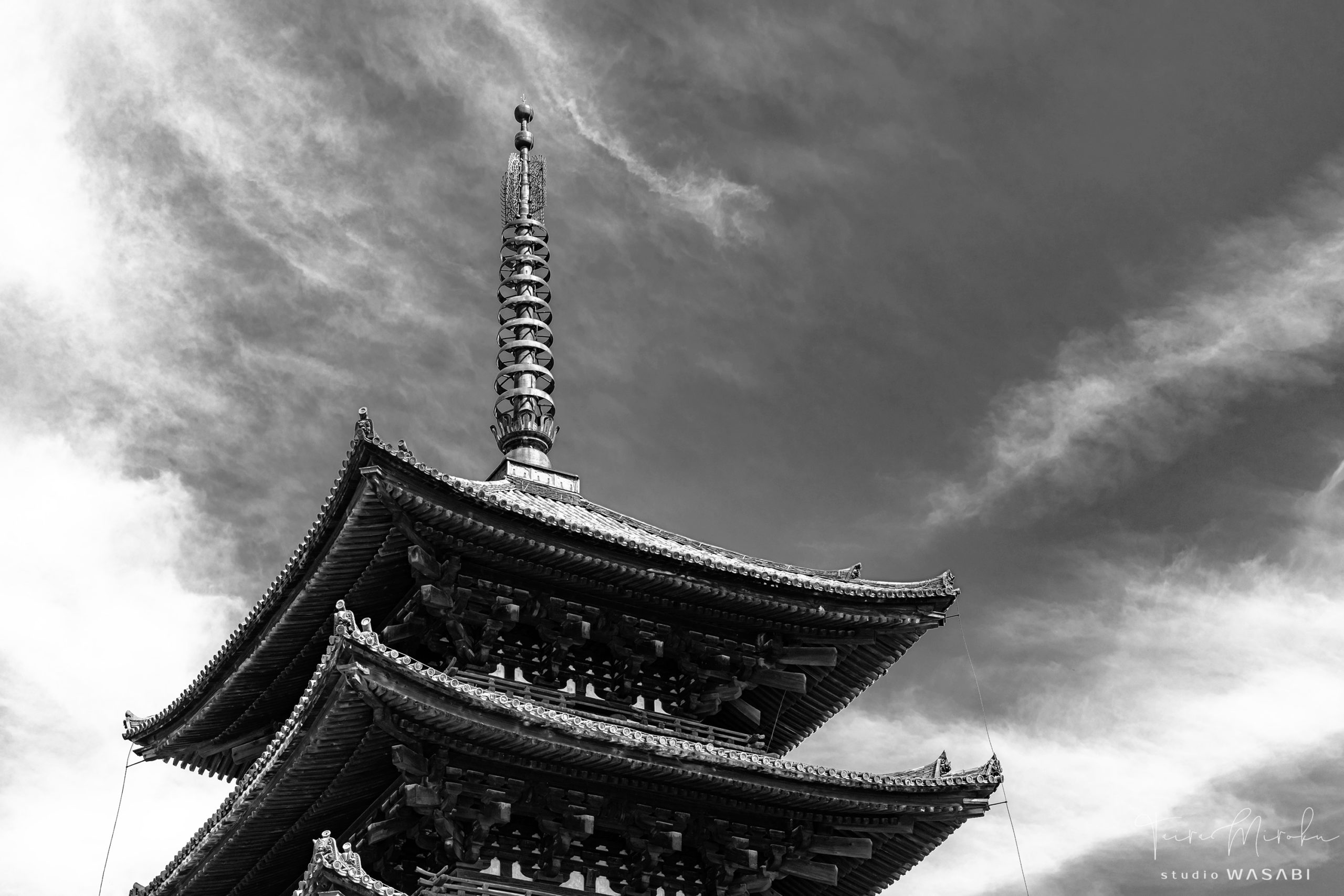
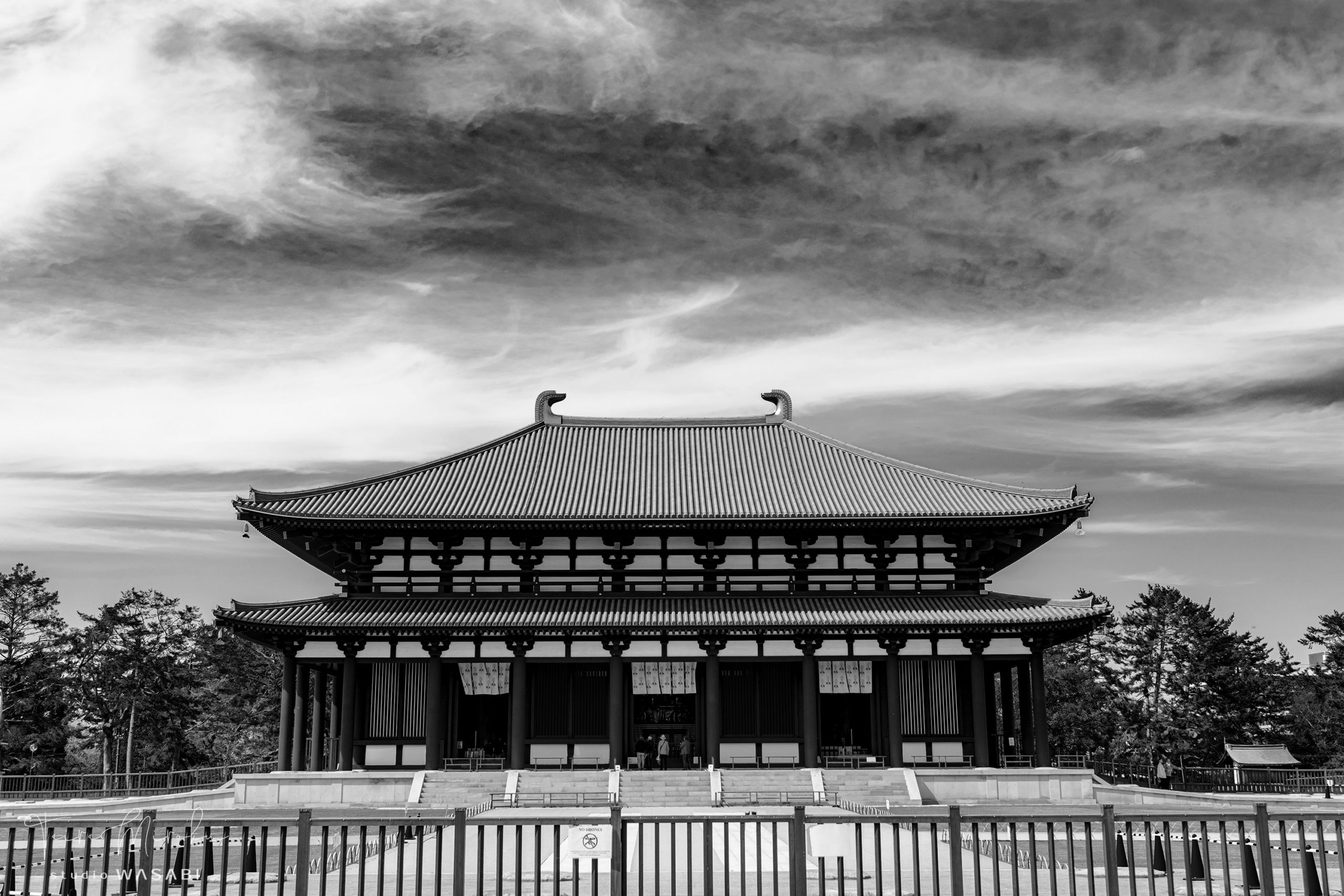
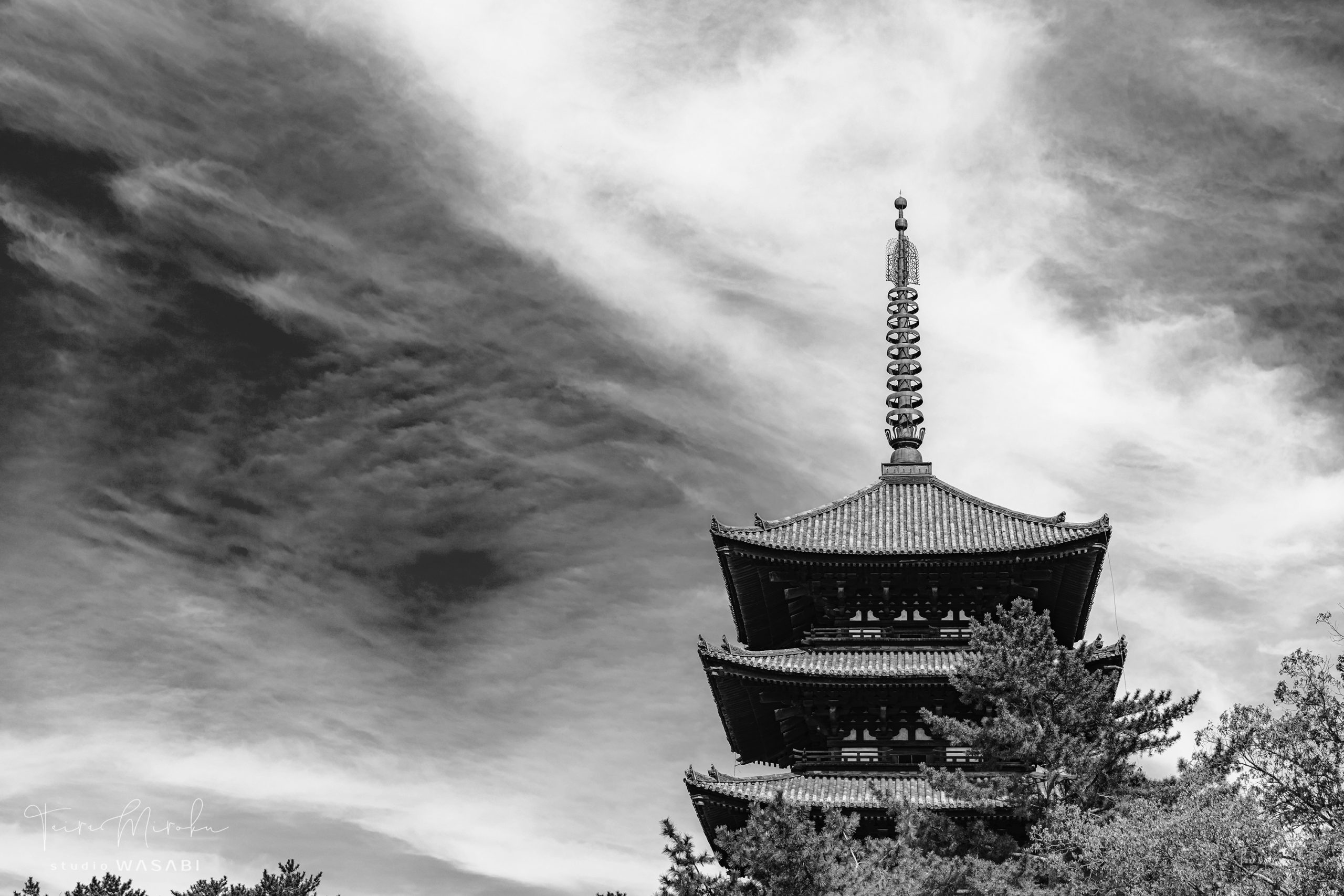
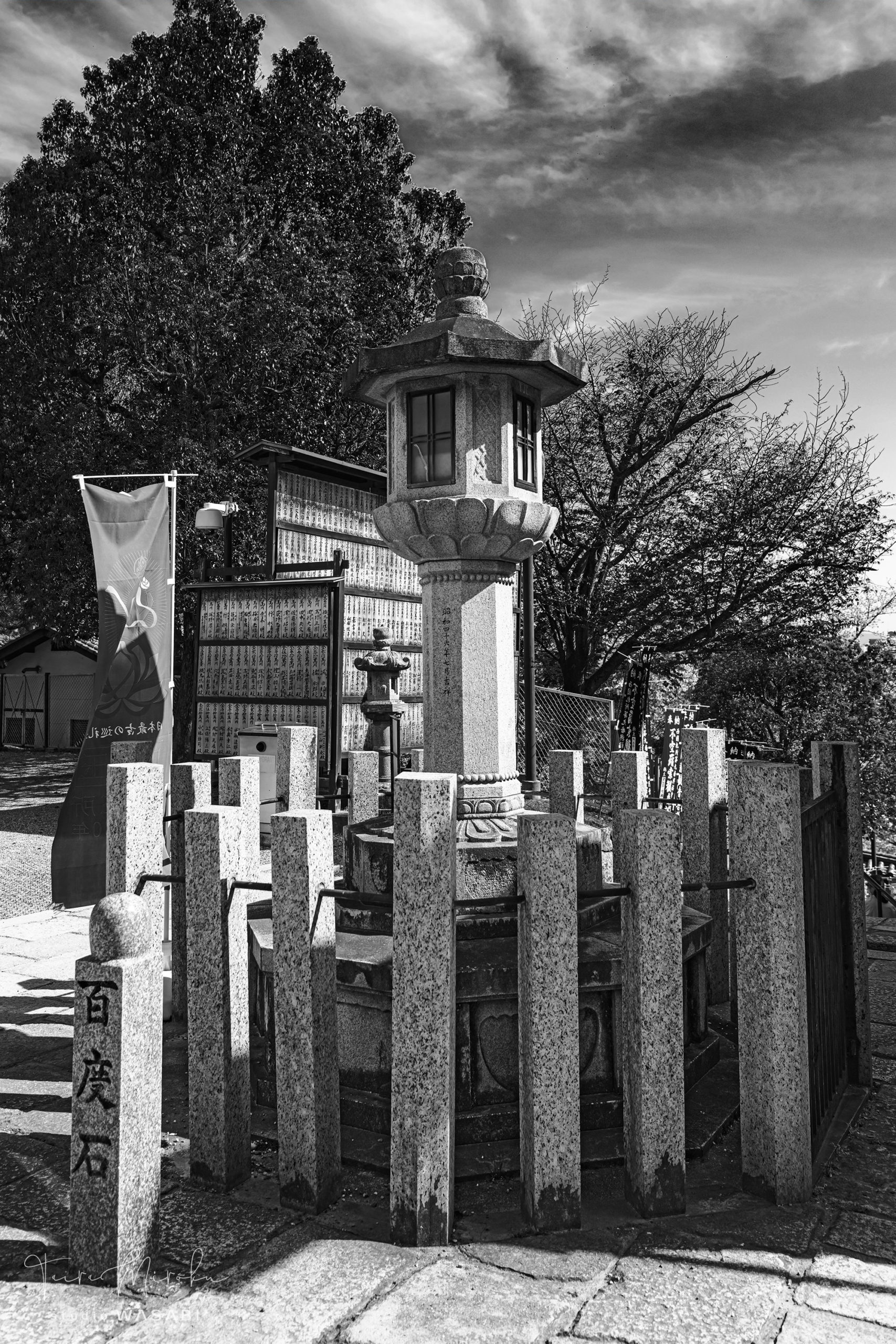
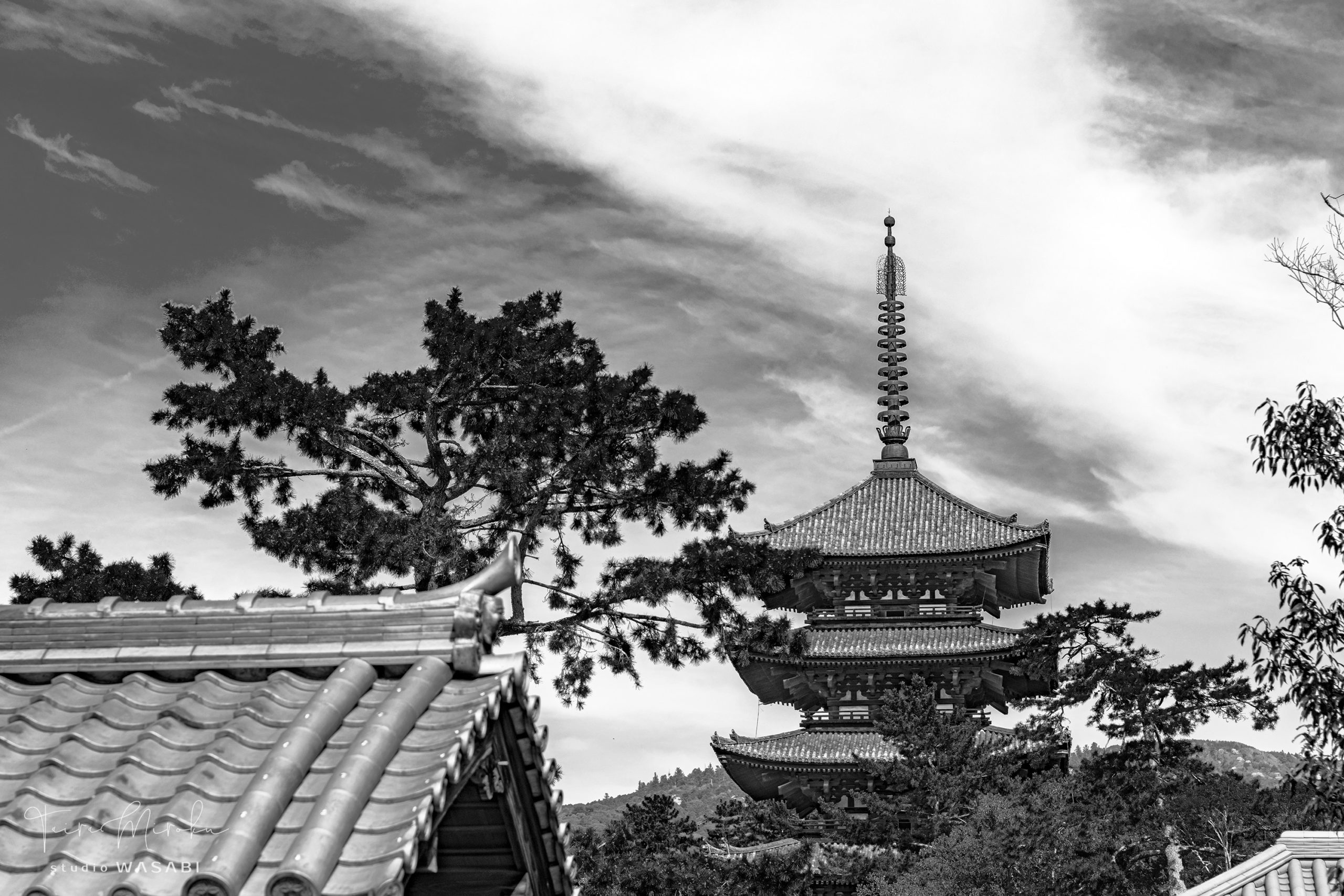
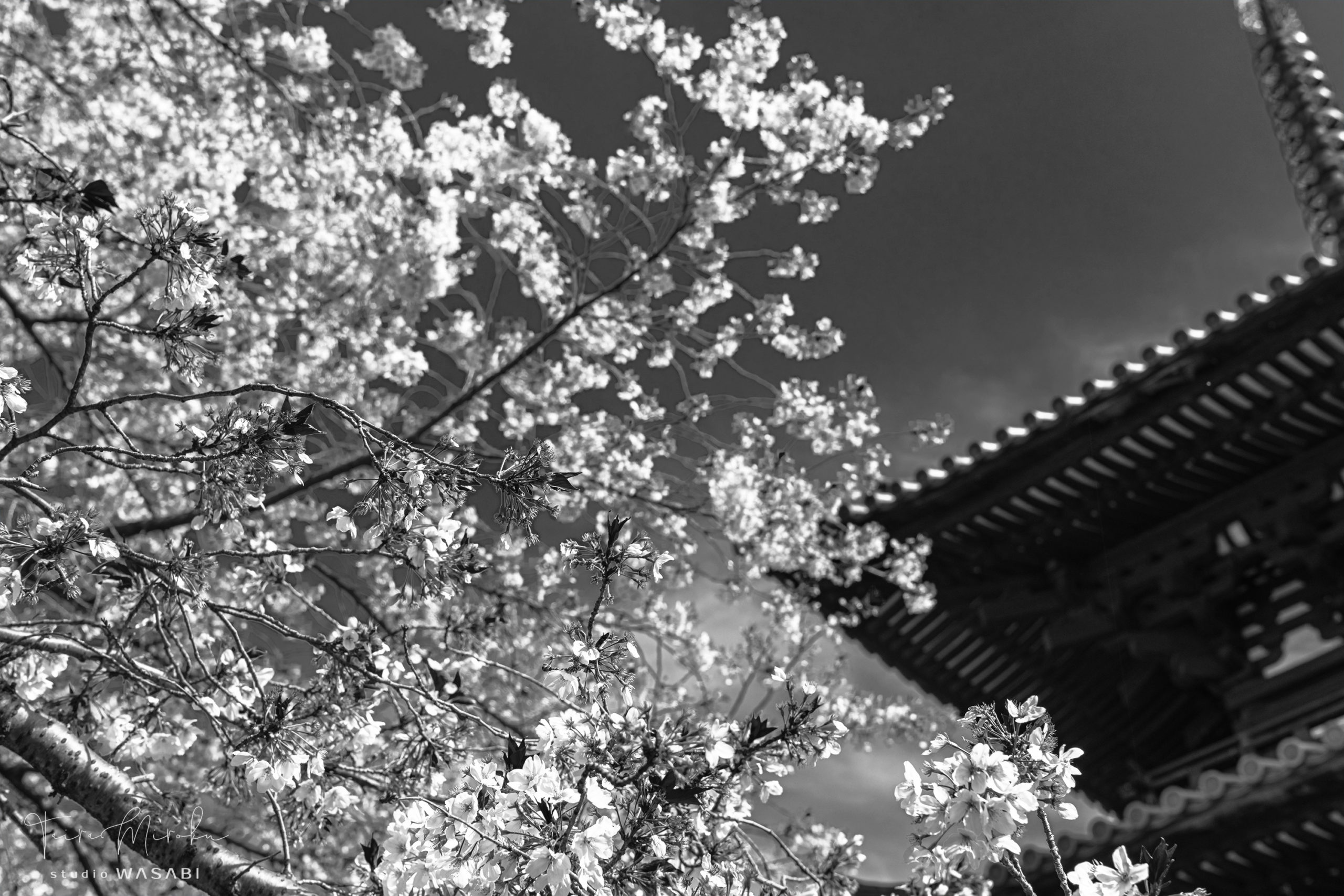
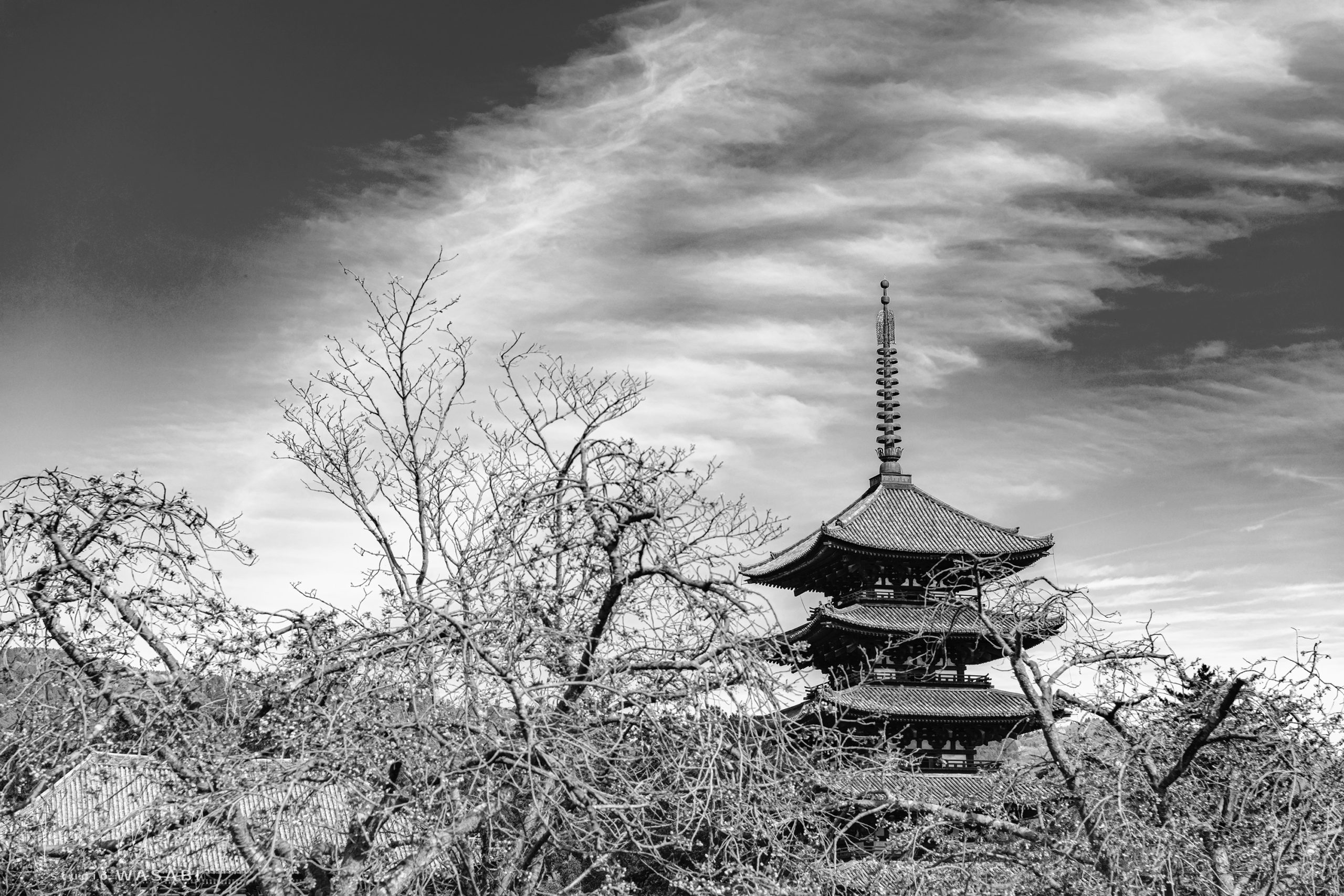
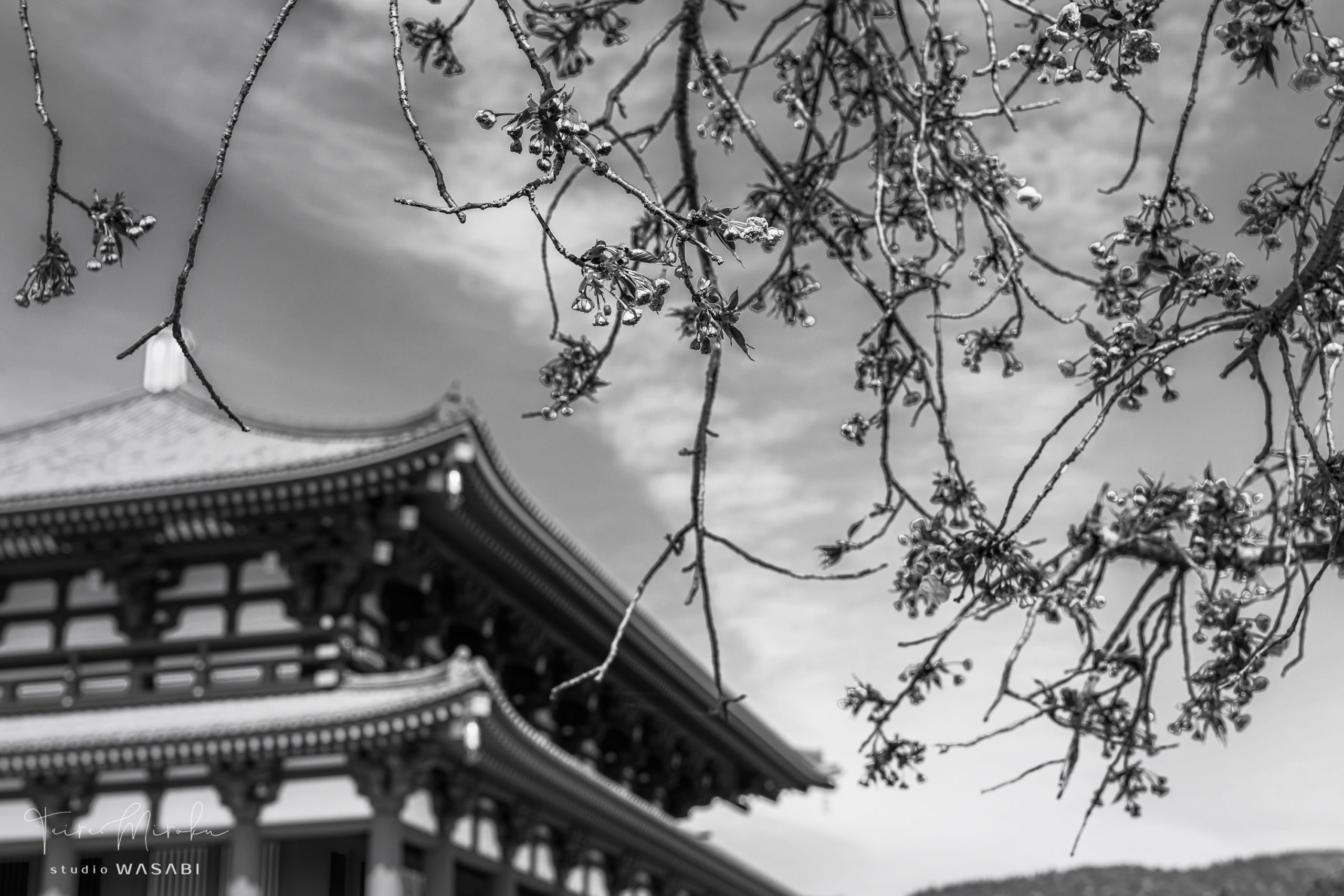
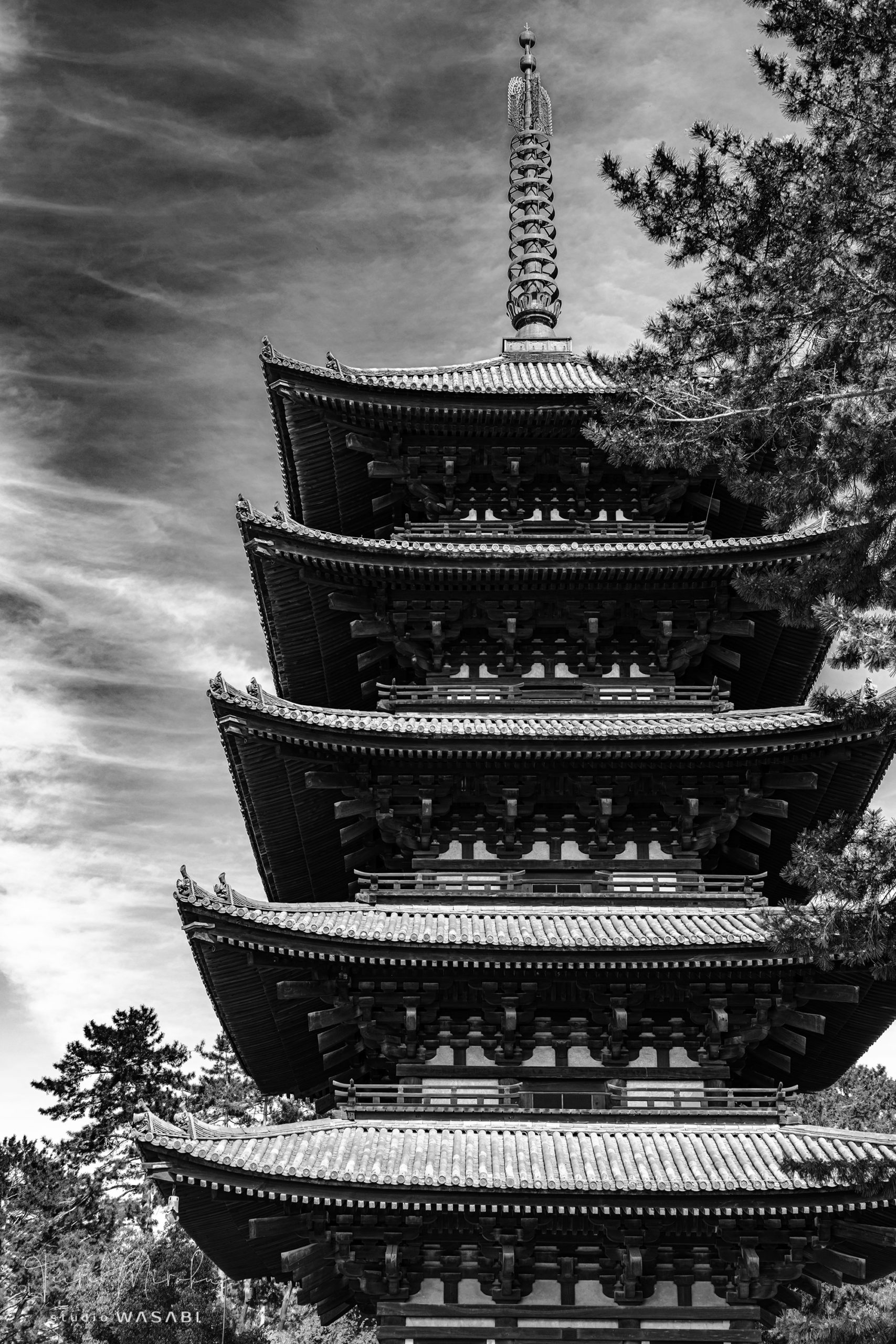
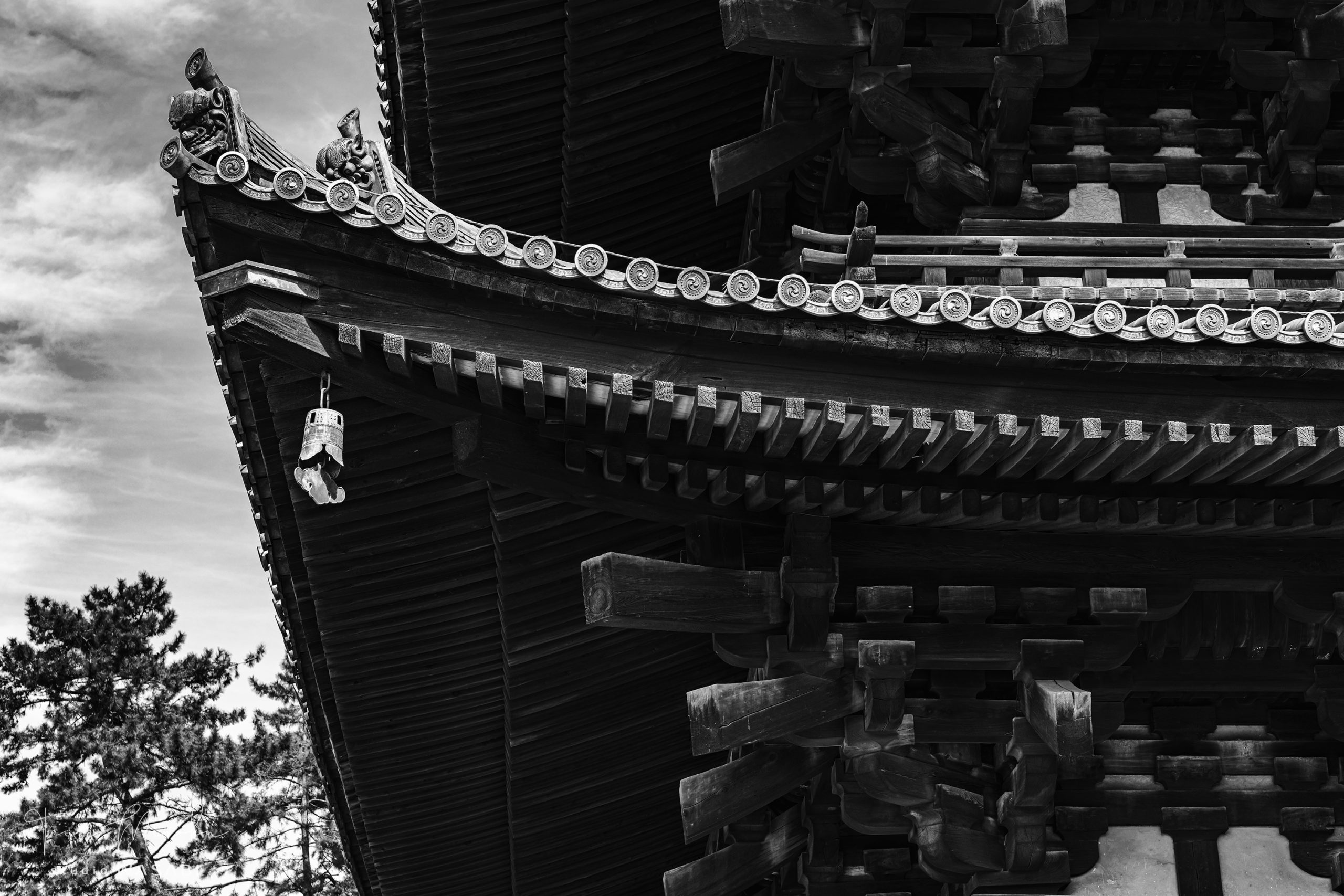
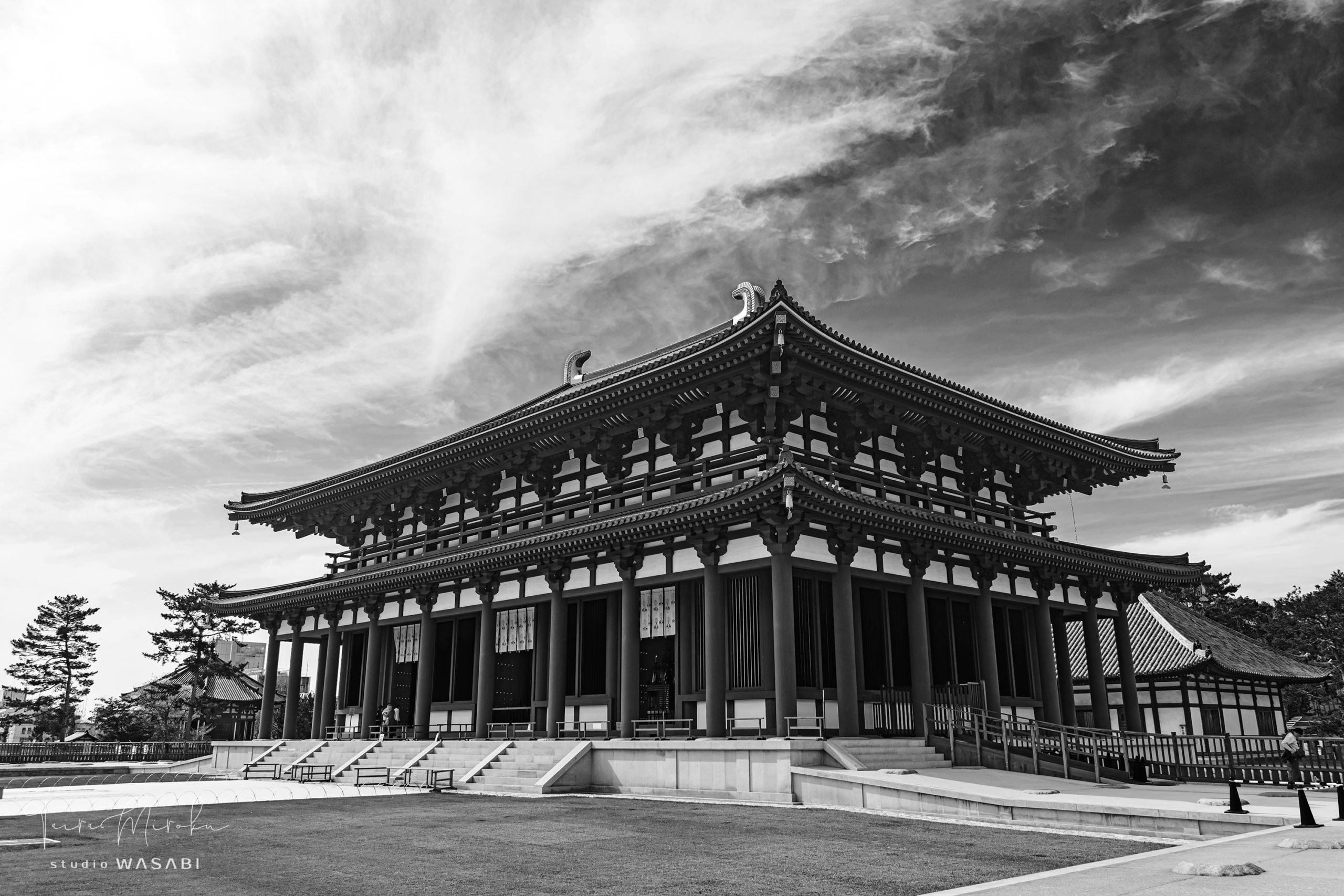
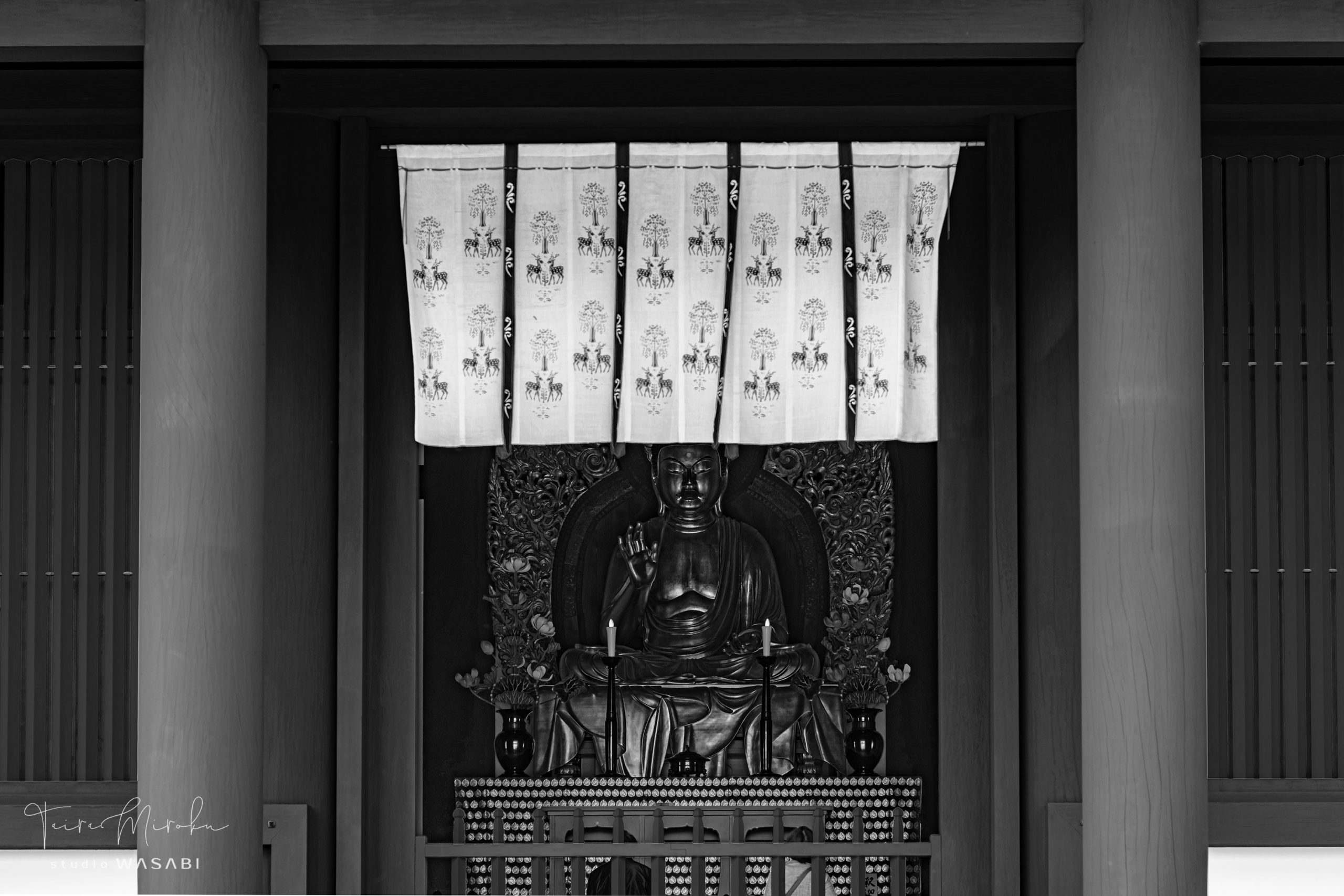
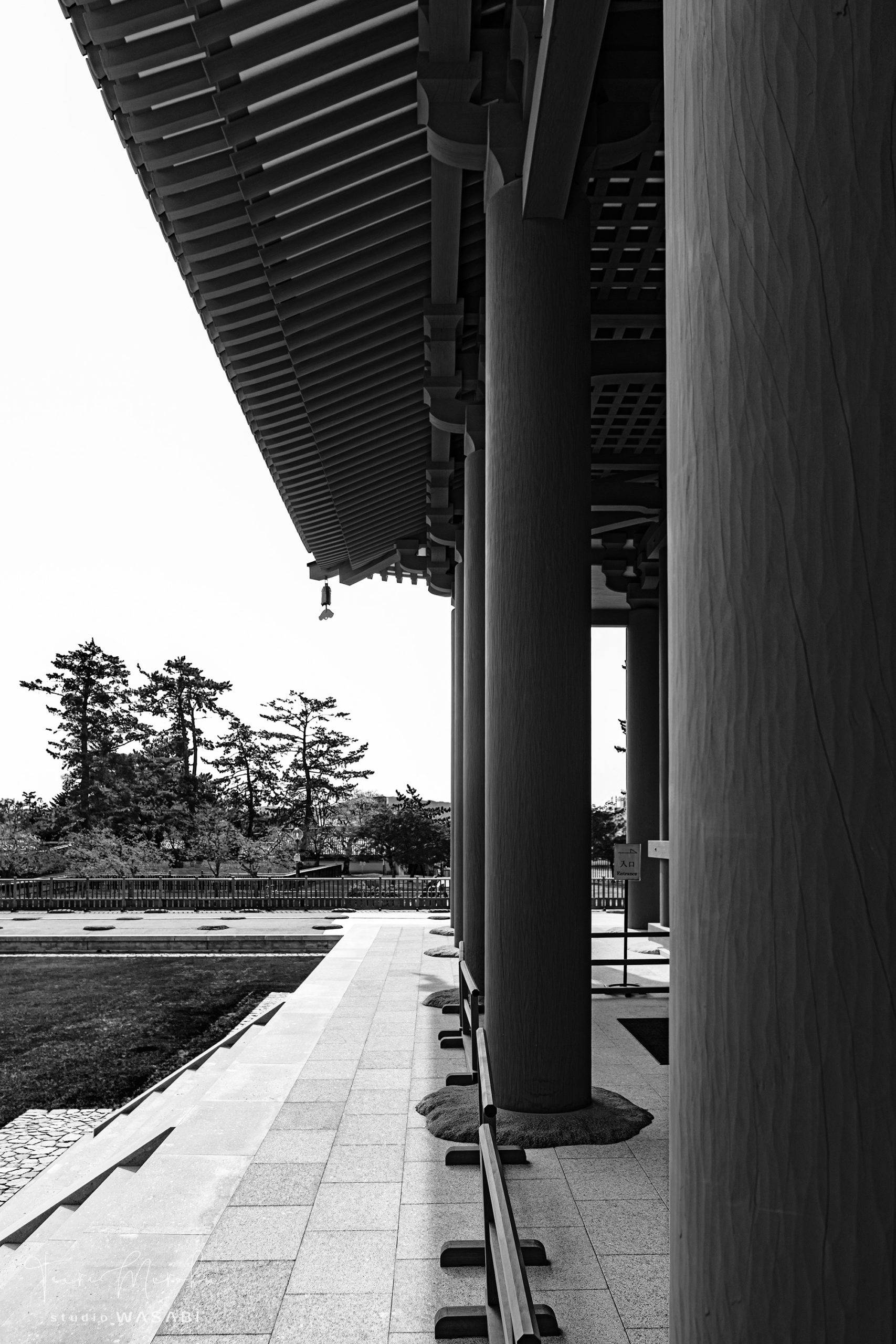
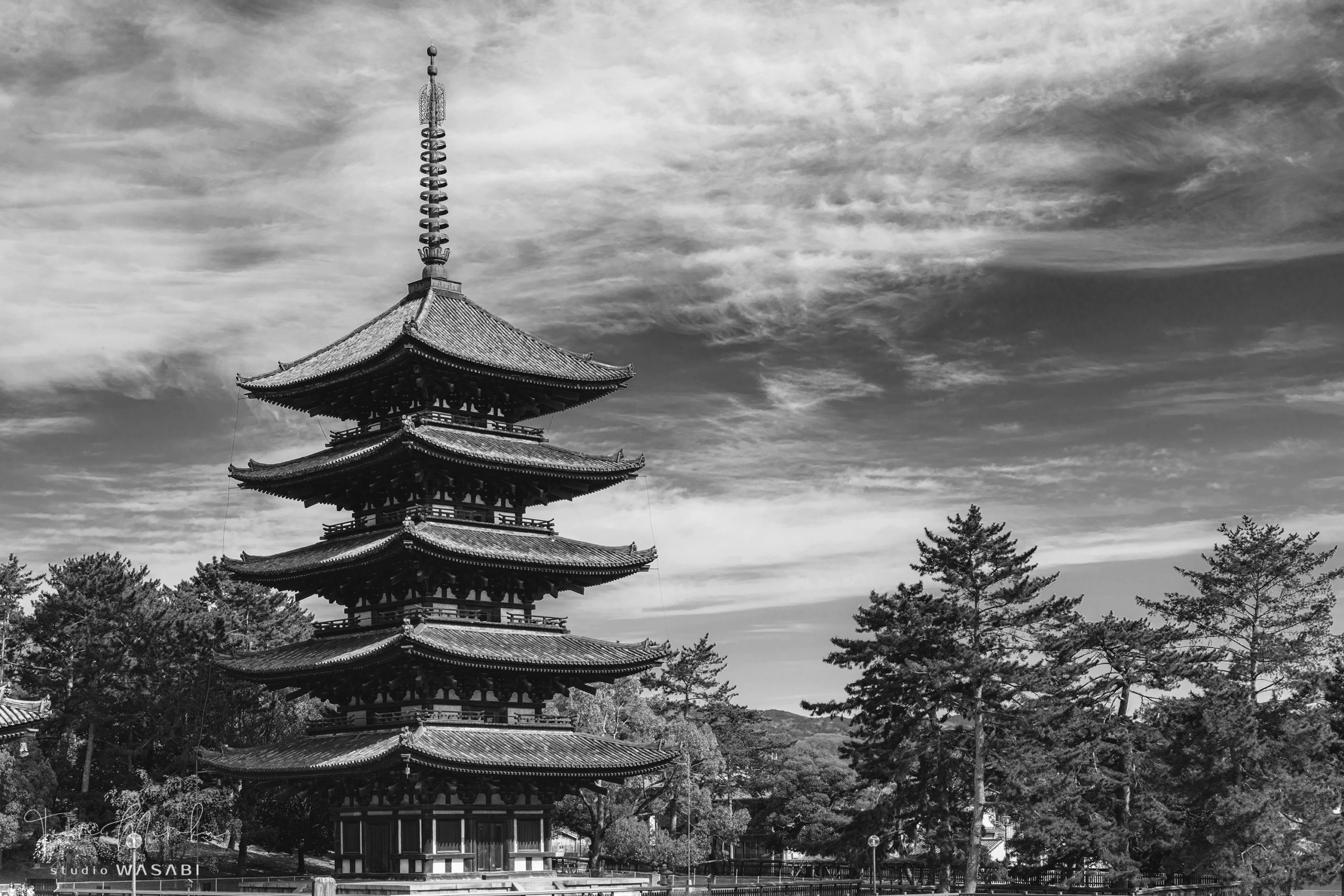
Spring scenery at Kofukuji Temple / Nara City, Nara Prefecture
興福寺春景色
創建千四百年を誇る古寺
— Ancient temple with a history of 1,400 years
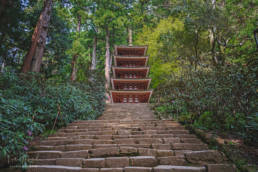
初春の奈良興福寺を訪れた。穏やかな春の空に五重塔がそびえ、風に揺れる木々が柔らかな音を奏でる。興福寺は、奈良県奈良市にある法相宗の大本山の寺院。南都七大寺の一つ。藤原氏の祖・藤原鎌足とその子息・藤原不比等ゆかりの寺院で藤原氏の氏寺で、古代から中世にかけて強大な勢力を誇った。「古都奈良の文化財」の一部として世界遺産に登録されている。
興福寺は、天智8年(669)に藤原鎌足が重い病気を患った際に、夫人である鏡女王が夫の回復を祈願して建立したと伝わる。鎌足の死後、壬申の乱のあった天武天皇元年(672年)に山階寺は藤原京に移転し、地名の高市郡厩坂をとって厩坂寺(うまやさかでら)と称する。
さらに、和銅3年(710年)、平城遷都の際、藤原不比等の計画によって移されるとともに、「興福寺」と名付けられた。
この和銅3年(710年)が実質的な興福寺の創建年といえ、中金堂の建築は平城遷都後まもなく開始された。
藤原氏の私寺である興福寺だが、その造営は国家の手で進められるようになる。
奈良時代には四大寺、平安時代には七大寺の一つに数えられ、特に摂関家・藤原北家との関係が深かったために手厚く保護され、寺勢は盛んになった。
平安時代には春日社の実権を手中におさめ、大和国を領するほどになり、また、鎌倉幕府・室町幕府は大和国に守護を置かず、興福寺がその任に当たった。
その後、明治政府による神仏分離令や社寺領上知令に伴う廃仏毀釈などにより興福寺は苦境に立たされたが、寺僧や有縁の人々の努力で復興が進展し、新たな興福寺としてその歴史を今に刻み続けている。
Architecture and sculptures that symbolize the Tenpyo culture, which combines Japanese culture, history, and nature.
I visited Kofuku-ji Temple in Nara in early spring. Kofuku-ji Temple is the head temple of the Hosso sect of Buddhism in Nara City, Nara Prefecture. It is one of the Seven Great Temples of Nara. It is the family temple of the Fujiwara clan, and is associated with Fujiwara Kamatari, the founder of the Fujiwara clan, and his son Fujiwara Fuhito. It was a powerful temple from ancient times to the Middle Ages. It is registered as a World Heritage Site as part of the “Cultural Assets of Ancient Nara.” Kofuku-ji Temple is said to have been built by Kagami no Hime, the wife of Fujiwara Kamatari, in 669, when he fell seriously ill. After Kamatari’s death, Yamashina-dera Temple was moved to Fujiwara-kyo in 672, the first year of the reign of Emperor Tenmu, when the Jinshin War occurred, and it was named Umayasaka-dera Temple after the place name Umayasaka in Takaichi County. Furthermore, in 710, when the capital was moved to Heijo, it was relocated there according to a plan by Fujiwara no Fuhito and given the name “Kofuku-ji Temple.” This year (710) can be said to be the actual founding year of Kofuku-ji Temple, and construction of the Chukon-do Hall began shortly after the capital was moved to Heijo. Although Kofuku-ji Temple was a private temple of the Fujiwara clan, its construction was carried out by the state. During the Nara period it was counted as one of the four great temples, and during the Heian period it was counted as one of the seven great temples. It was particularly well protected due to its close ties with the regent family and the Northern Fujiwara clan, and the temple flourished. During the Heian period, it gained real power over Kasuga Shrine and came to rule Yamato Province, and the Kamakura and Muromachi shogunates did not appoint a shugo in Yamato Province, so Kofuku-ji Temple took on that role. Kofuku-ji Temple later fell on hard times due to the Meiji government’s Shinto-Buddhist separation order and the abolition of Buddhism and the destruction of Buddhist temples and shrines following the Order to Conquer Shrines and Temples. However, thanks to the efforts of the temple’s monks and related people, it was able to recover and the temple continues to record its history to this day as a new Kofuku-ji Temple.